
Robo Verse: End-to-End Robotic Solutions for Refinery
December 17, 2025
Arham Oil Expanding the Robotic Tank Cleaning Services in Southeast Asia
January 12, 2026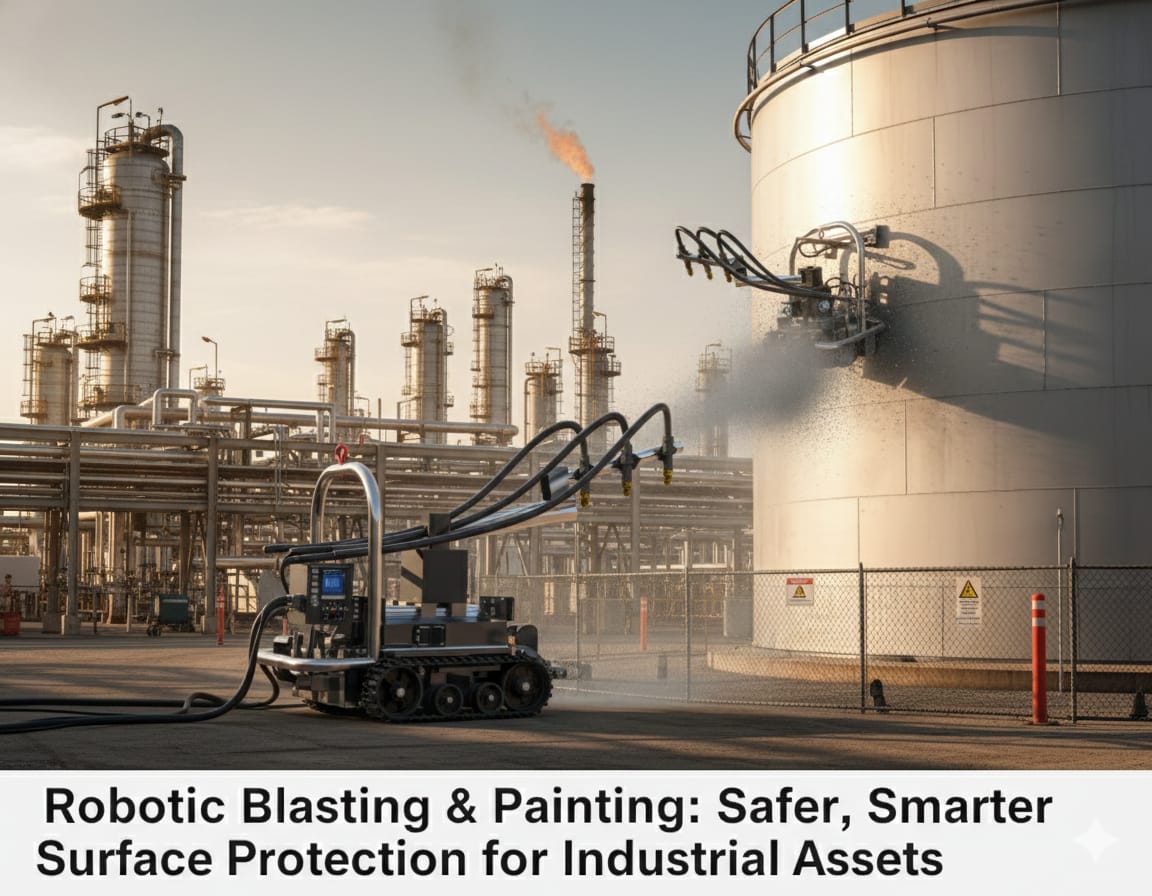
Industrial assets across oil & gas, petrochemical, and refinery environments are continuously exposed to aggressive operating conditions. High temperatures, corrosive chemicals, moisture, and mechanical stress gradually weaken protective coatings, accelerating corrosion and structural degradation. If left unaddressed, this deterioration leads to asset failure, safety incidents, and unplanned shutdowns. Robotic blasting and painting has emerged as a reliable, technology-driven solution that allows operators to maintain critical assets while improving safety, consistency, and long-term performance.
Robotic blasting and painting involves the use of remotely operated or automated robotic systems to clean, prepare, and coat industrial surfaces. These systems replace or significantly reduce manual intervention, especially in hazardous areas such as confined spaces, elevated structures, and explosive environments. For oil & gas operators, this approach aligns strongly with modern safety expectations and asset integrity standards.
Understanding Robotic Blasting & Painting in Oil & Gas Facilities
In traditional surface treatment methods, technicians are physically exposed to abrasive materials, toxic fumes, high noise levels, and fall hazards. In contrast, robotic systems allow surface preparation and coating application to be carried out with operators positioned at a safe distance. This shift drastically reduces occupational risks while ensuring greater control over process parameters.
Robotic blasting systems use abrasive media or high-pressure water jets to remove corrosion, mill scale, old coatings, and contaminants. These systems maintain a consistent standoff distance and blasting angle, resulting in uniform surface profiles that are essential for coating adhesion. Robotic painting systems then apply protective coatings using programmed spray paths and controlled flow rates, ensuring consistent film thickness across the entire surface.
Why Refineries and Terminals Are Adopting Robotic Solutions
Oil & gas facilities operate under strict regulatory frameworks that prioritize safety, environmental protection, and quality assurance. Manual blasting and painting often struggle to meet these expectations consistently, especially in high-risk zones. Robotic solutions address these concerns by combining automation, precision, and repeatability.
Key drivers behind adoption include:
- Reduced human exposure to hazardous environments
- Consistent surface preparation and coating quality
- Faster execution with minimal operational disruption
- Improved compliance with international standards such as ATEX ,IECEx
From a business perspective, robotic systems also reduce rework, coating failures, and long-term maintenance costs, making them a strategic investment rather than a short-term expense.
Industrial Assets Best Suited for Robotic Blasting & Painting
Robotic blasting and painting is particularly effective for assets that are difficult, dangerous, or inefficient to access manually. These include crude oil storage tanks, floating roof tanks, pressure vessels, pipelines, structural steel frameworks, columns, and pipe racks. In refineries, robotic systems are commonly deployed in areas where confined space entry would otherwise require extensive safety permits and downtime.
Offshore modules, loading terminals, and petrochemical units also benefit significantly from robotic surface treatment due to their complex geometries and exposure to corrosive marine or chemical environments.
Technology Behind Robotic Surface Preparation
Modern robotic blasting systems are equipped with sensors and control mechanisms that ensure consistent cleaning results regardless of surface orientation or complexity. Containment-based blasting solutions capture dust and debris at the source, minimizing environmental contamination and ensuring safer operations within live plants.
Robotic painting systems further enhance quality by monitoring coating thickness, spray overlap, and application speed in real time. This level of control is difficult to achieve with manual application, especially over large or irregular surfaces.
Workflow and Execution in Industrial Settings
A typical robotic blasting and painting project begins with a detailed inspection of the asset. Surface condition, corrosion severity, accessibility, and environmental factors are evaluated to define the most effective robotic approach. Equipment selection and programming are then tailored to the asset’s geometry and coating requirements.
During execution, robotic systems perform blasting and painting under continuous monitoring. Operators track progress remotely, making adjustments as needed to maintain quality. This structured workflow minimizes delays and ensures predictable outcomes.
Quality Assurance and Inspection Practices
Quality verification is an integral part of robotic blasting and painting. Surface cleanliness is checked through visual inspection and surface profile measurements. After coating application, dry film thickness, adhesion strength, and curing quality are measured and documented.
These inspection records provide asset owners with traceable documentation for audits, regulatory compliance, and future maintenance planning. For procurement and asset integrity teams, this transparency adds significant value.
Addressing Common Industry Challenges
Environmental conditions such as humidity, temperature variations, and airborne contaminants often compromise manual coating projects. Robotic systems mitigate these challenges by maintaining consistent application parameters and reducing human error.
Uneven coating thickness, missed areas, and fatigue-related mistakes are also eliminated, leading to longer coating life and improved corrosion resistance.
Best Practices for Long-Term Asset Protection
Successful robotic blasting and painting projects are aligned with broader asset integrity and maintenance strategies. Proper surface preparation, correct coating selection, and adherence to industry standards form the foundation of long-lasting protection.
Preventive maintenance planning becomes more effective when inspection data from robotic operations is integrated into asset management systems. This allows facility managers to anticipate corrosion risks and schedule maintenance proactively.
Strategic Considerations for Decision-Makers
When evaluating robotic blasting and painting services, decision-makers should focus on technical expertise, safety compliance, and industry experience. A service provider familiar with oil & gas operations understands the importance of coordination, permitting, and minimal disruption.
Selecting the right partner ensures that robotic technology delivers its full value in terms of safety, quality, and return on investment.
Why Arham Oil Is a Trusted Partner for Robotic Blasting & Painting
Arham Oil delivers robotic blasting and painting solutions specifically designed for oil & gas, refinery, and petrochemical environments. Our experience in high-risk industrial settings allows us to execute projects safely, efficiently, and in full compliance with international standards.
We focus on extending asset life, reducing downtime, and supporting our clients with clear documentation and technical guidance throughout the project lifecycle.
Robotic surface treatment supports sustainability by reducing waste, controlling emissions, and optimizing coating usage. By extending the service life of industrial assets, operators also reduce the environmental impact associated with frequent repairs or replacements.
Robotic blasting and painting represents a major advancement in industrial surface protection. For oil & gas operators seeking safer operations, consistent quality, and long-term cost efficiency, robotic solutions offer a practical and proven path forward. As asset integrity and safety expectations continue to rise, automation will play an increasingly central role in industrial maintenance strategies.
FAQs:
Can robotic blasting and painting be used in live refinery environments?
Yes, with proper planning and safety controls, robotic systems can operate without shutting down the plant.
How does robotic blasting reduce environmental impact?
Controlled blasting and containment minimize dust, waste, and emissions.
What certifications should a robotic blasting provider have?
Look for compliance with ISO, NACE, SSPC, and oil & gas safety standards.
Is robotic blasting suitable for aging tanks?
Yes, robotic systems are ideal for corroded or hard-to-access surfaces.
How does automation affect project timelines?
Robotic operations typically reduce project duration by improving speed and consistency.
