
How ATEX Zone 0 Robots Are Changing Hazardous Tank Cleaning
June 1, 2026Arham Oil Secures Indian Patent for Innovative Heating Coil System
June 29, 2026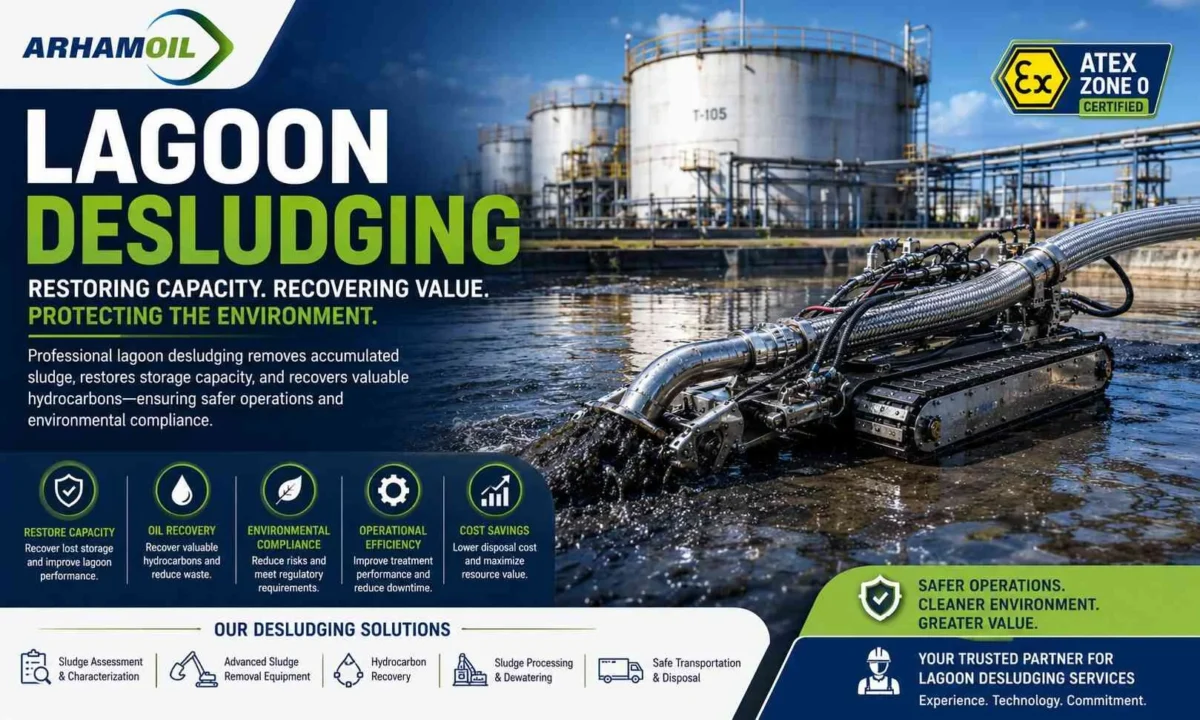
Industrial lagoons are an essential part of refinery and oil & gas operations, serving as collection points for wastewater, oily residues, process waste, and sludge. Over time, these lagoons accumulate large volumes of sediment, hydrocarbons, and solid waste that settle at the bottom and gradually reduce the lagoon’s effective capacity. If not removed, this buildup can impact wastewater management, increase environmental risks, and lead to costly operational issues.
This is where lagoon desludging plays a critical role. By removing accumulated sludge and recovering trapped hydrocarbons, facilities can restore lagoon performance, improve compliance, and reduce long-term maintenance costs.
What is Lagoon Desludging?
Lagoon desludging is the process of removing settled sludge, sediments, and oily waste from industrial lagoons. These lagoons often receive wastewater from refinery processes, tank cleaning operations, oil-water separators, and other industrial activities.
As solids and hydrocarbons settle over time, a thick sludge layer forms at the bottom. This layer occupies valuable storage space and can interfere with the lagoon’s ability to perform efficiently. Professional desludging removes this material safely while ensuring proper treatment, disposal, or recovery of valuable resources.
For refineries and petrochemical facilities, regular lagoon cleaning is a key part of effective industrial waste management and environmental stewardship.
Why Lagoons Accumulate Sludge
Sludge accumulation is a natural result of industrial operations. Wastewater entering the lagoon often contains suspended solids, oil droplets, sediments, and various contaminants. As the water remains in the lagoon, heavier materials settle while hydrocarbons become trapped within the sludge layer.
Common sources of lagoon sludge include:
- Refinery wastewater streams
- Tank cleaning residues
- Oil-water separator discharge
- Slop oil handling systems
- Stormwater runoff carrying sediments
- Production and maintenance activities
Over several years, these materials can significantly reduce lagoon capacity and create operational challenges if not addressed through periodic desludging.
Key Benefits of Lagoon Desludging
One of the biggest benefits of lagoon desludging is the restoration of storage capacity. Removing accumulated sludge allows the lagoon to function as originally designed, improving wastewater management and reducing overflow risks.
Another major advantage is the recovery of valuable hydrocarbons. Many lagoon sludges contain recoverable oil that can be separated and processed instead of being disposed of as waste. This helps facilities reduce disposal costs while generating additional value from existing waste streams.
Regular desludging also supports environmental compliance by reducing the risk of contamination and improving overall waste management practices. Facilities that maintain clean lagoons are better positioned to meet regulatory requirements and sustainability goals.
In addition, desludging can improve operational efficiency by reducing maintenance issues and extending the lifespan of lagoon infrastructure.
The Lagoon Desludging Process
A successful lagoon desludging project begins with a detailed assessment. This involves measuring sludge depth, evaluating sludge composition, and determining the most effective removal method.
Once the assessment is complete, specialized equipment is deployed to remove the sludge. Depending on the lagoon size and site conditions, this may involve pumping systems, dredging equipment, excavators, or floating sludge removal units.
The removed sludge is then transported to processing facilities where it undergoes separation and treatment. Oil, water, and solids are separated using mechanical and thermal processes to maximize recovery and minimize waste.
After desludging is completed, the lagoon regains much of its original storage capacity and operational efficiency.
Hydrocarbon Recovery from Lagoon Sludge
Modern lagoon desludging projects focus not only on waste removal but also on oil recovery.
Lagoon sludge often contains significant quantities of trapped hydrocarbons that still have value. Through advanced sludge processing technologies, these hydrocarbons can be separated and recovered for reuse or reprocessing.
Typical recovery methods include:
- Mechanical separation
- Centrifugation
- Sludge conditioning
- Thermal treatment
- Oil-water-solid separation systems
Recovering hydrocarbons helps reduce waste disposal volumes while creating economic value from material that would otherwise be discarded.
This approach transforms lagoon cleaning from a maintenance activity into a resource recovery opportunity.
Modern Technologies Used in Lagoon Desludging
The oil and gas industry has moved beyond traditional excavation methods and now uses advanced technologies to improve efficiency and safety.
Modern lagoon cleaning projects may utilize:
- High-capacity sludge pumps
- Floating dredging systems
- Automated sludge transfer equipment
- Oil recovery and separation units
- Real-time monitoring systems
- Advanced dewatering technologies
These solutions allow operators to remove sludge more efficiently while minimizing environmental impact and operational disruption.
Why Professional Lagoon Desludging Services Matter
Lagoon cleaning is a specialized activity that requires technical expertise, environmental knowledge, and proper safety management.
An experienced service provider can accurately assess sludge conditions, select the right removal techniques, and maximize hydrocarbon recovery. Professional teams also ensure compliance with environmental regulations and implement safe work practices throughout the project.
Choosing the right partner can significantly improve project outcomes while reducing risks, downtime, and overall costs.
Summary
Lagoon desludging is an essential part of refinery and oil & gas facility maintenance. By removing accumulated sludge, restoring storage capacity, and recovering valuable hydrocarbons, operators can improve efficiency, reduce environmental risks, and maximize the value of their waste management systems.
With modern desludging technologies and professional execution, lagoon cleaning becomes more than just waste removal—it becomes a strategic investment in operational performance, sustainability, and long-term asset reliability.
FAQs
1. How do I know when a lagoon requires desludging?
Regular inspections, sludge depth surveys, reduced storage capacity, and declining treatment performance are common indicators.
2. Can oil be recovered from lagoon sludge?
Yes. Advanced sludge processing technologies can recover valuable hydrocarbons from lagoon sludge for reuse or reprocessing.
3. Is lagoon desludging environmentally safe?
When performed by experienced professionals using proper equipment and procedures, lagoon desludging is safe and environmentally compliant.
4. What happens to the solids after sludge processing?
Separated solids are treated and disposed of according to environmental regulations or further processed when possible.
5. Can lagoon desludging be performed while operations continue?
In many cases, yes. Modern equipment and project planning allow desludging activities to be conducted with minimal disruption to facility operations.
