
ATEX Zone 0 vs Zone 1 vs Zone 2: What Refineries Need to Know Before Choosing a Robot
September 10, 2026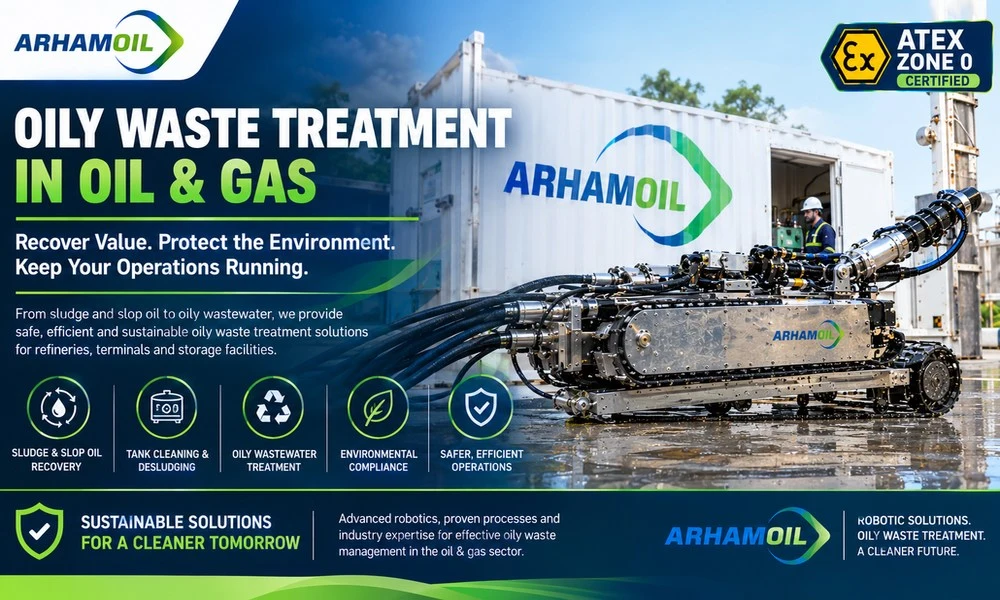
Oily waste treatment is a routine challenge for every refinery, oil terminal and crude storage facility. Left in tanks, pits or lagoons, oily sludge eats into storage capacity, adds environmental risk and locks away oil you could have recovered. The real question is whether you dispose of it or recover value from it first.
What Is Oily Waste Treatment?
Oily waste treatment is the process of separating oil, water and solids in hydrocarbon-contaminated waste so that usable oil can be recovered and the remaining waste can be managed safely and in compliance with regulations.
It covers waste streams such as:
- Oily sludge and tank-bottom sludge
- Slop oil
- Oily wastewater
- Refinery and separator sludge
- Lagoon and pond sludge
- Hydrocarbon-contaminated soil
Why Does It Matter for Oil & Gas Facilities?
Oily sludge is not just waste. It often holds a meaningful share of recoverable hydrocarbons, so treating it as a recovery job brings three benefits:
- Oil recovery. Hydrocarbons trapped in sludge can be returned to the process rather than discarded.
- Lower disposal volume. Less residual waste means less transport and disposal cost and a smaller environmental footprint.
- Restored capacity. Cleaning tanks and lagoons gives storage back and helps keep operations running smoothly.
Safety matters too. Sludge-filled tanks are confined spaces with hazardous vapors and difficult working conditions, which is why many facilities now prefer methods that keep people out of the tank.
How Does Oily Waste Treatment Work?
There is no universal process. Two tanks on the same site can hold very different sludge. A typical treatment program follows five stages.
1. Waste characterization. Samples are tested for oil, water and solids content, viscosity and other properties. This step decides everything that follows, so it comes before choosing equipment.
2. Sludge conditioning. Heavy or compacted sludge may need controlled heating or mixing so it flows and separates more easily.
3. Mechanical separation. Depending on the waste, oil, water and solids are separated by methods such as decanting, filtration or centrifugation.
4. Hydrocarbon recovery. The recovered oil is assessed for reprocessing or reuse. This is where a disposal cost turns into a recovered resource.
5. Residual waste management. Leftover water and solids may need dewatering, stabilization or compliant disposal. A responsible program accounts for the whole waste stream, not just the oil.
Where Does Robotic Tank Cleaning Fit In?
Before any treatment can begin, the sludge has to come out of the tank. Robotic tank cleaning does this without sending workers inside. A remotely operated crawler breaks up and mobilizes the sludge and pumps it to a recovery system.
This non-man-entry approach offers:
- Reduced personnel exposure to hazardous vapors and confined-space risks
- Access to areas that are hard to clean manually
- A direct, continuous link between sludge removal and oil recovery
The robot is only the first step. Results depend on the full chain: removal, pumping, separation, recovery and residual waste handling.
What Should You Look for in an Oily Waste Treatment Provider?
Equipment lists can be misleading. Ask whether the contractor can:
- Show experience with refinery, terminal and crude storage sludge
- Characterize your waste before proposing a method
- Offer robotic or non-man-entry cleaning where suitable
- Recover hydrocarbons, not just remove and dispose
- Manage transport and residual waste in line with local regulations
- Provide clear safety procedures and project documentation
The best solution is the one built around your waste, your site constraints and your recovery goals.
Moving From “Remove and Dispose” to “Remove and Recover”
At Arham Oil, robotic sludge removal, tank cleaning, oily sludge recovery and reprocessing work together as one connected service. Your team deals with one provider from the sludge in the tank to the recovered oil, with the residual waste managed responsibly.
If your refinery, terminal or storage facility has accumulated sludge or hydrocarbon waste, contact us for a project-specific assessment and find out what is recoverable.
Frequently Asked Questions
1. What is the difference between oily waste treatment and disposal?
Treatment separates, recovers, or processes the components of the waste. Disposal is the final handling of whatever cannot be recovered or reused.
2. Does oily sludge contain recoverable oil?
Often, yes. The amount depends on the source and composition, which is why characterization comes first.
3. Can oily waste be treated while the facility is operating?
It depends on the waste source, site conditions, and safety requirements. A project-specific assessment is needed before work starts.
4. How is oily sludge transported after removal?
Transport depends on the waste classification, quantity and local regulations. It should follow procedures matched to the waste’s characteristics.
5. Can robotic tank cleaning be combined with sludge recovery?
Yes. Sludge removed by a robotic crawler can be transferred directly to separation and recovery, which links tank cleaning and oil recovery in one process.
