
Arham Oil Secures Indian Patent for Innovative Heating Coil System
June 29, 2026Oily Waste Treatment in Oil & Gas: How to Recover Value from Sludge and Slop Oil
September 21, 2026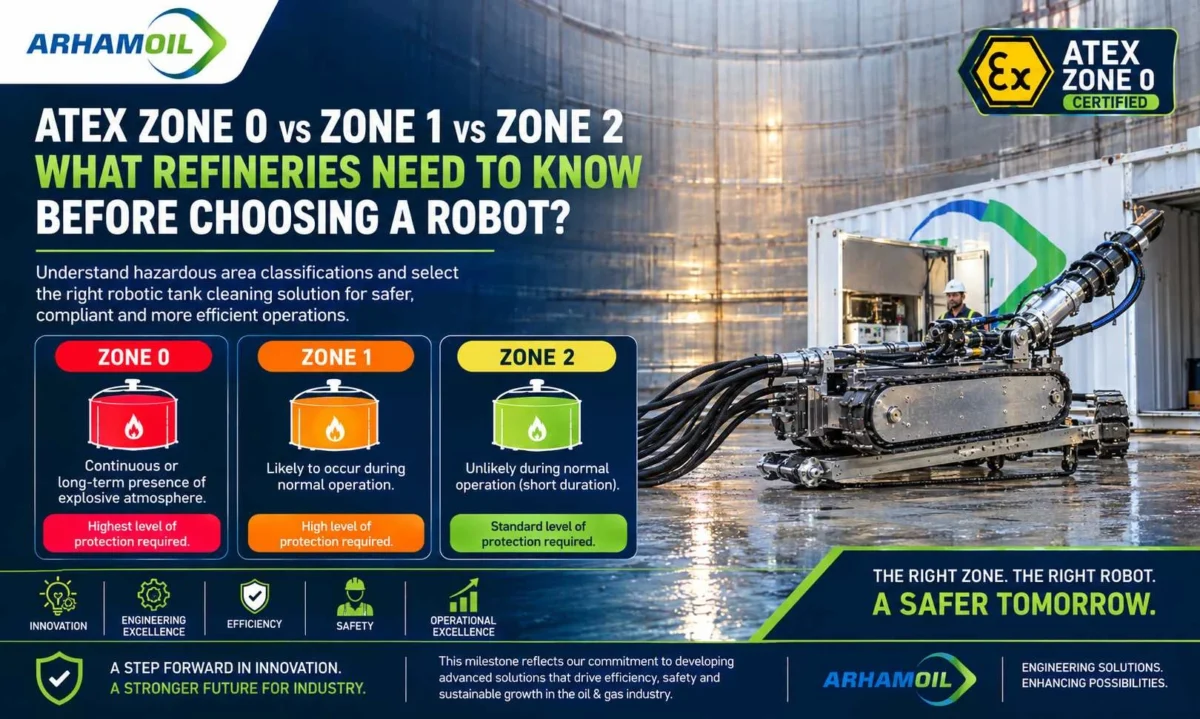
Selecting the right robotic system for hazardous tank cleaning is not simply a matter of performance it is a matter of safety, compliance, and operational reliability.
If you have ever been involved in a refinery tank cleaning, sludge recovery, or lagoon desludging project, you have likely heard terms such as ATEX Zone 0, Zone 1, and Zone 2. While these classifications are commonly referenced during equipment selection, many decision-makers are not always clear about what they actually mean and why they are critical when choosing a robotic solution.
In oil and gas facilities, a wrong equipment classification is more than a technical oversight. Using equipment that is not certified for the hazardous environment in which it operates can create serious safety risks, regulatory concerns, and operational disruptions.
Before selecting a robotic tank cleaning or sludge recovery system, it is important to understand the differences between hazardous area classifications and how they impact equipment selection.
Understanding ATEX Hazardous Area Classification
ATEX is derived from the French term “ATmosphères EXplosibles” and refers to regulations designed to ensure equipment can operate safely in explosive atmospheres.
Although ATEX originated in Europe, its principles are widely recognized throughout the global oil and gas industry. In India and many international markets, hazardous area classifications are also governed by IEC standards and supported by regulatory frameworks such as PESO guidelines.
Hazardous zones are not classified based solely on the type of flammable material present. Instead, they are categorized according to how frequently and for how long an explosive atmosphere may exist in a specific location.
This classification determines the type of equipment that can be safely used within that environment.
ATEX Zone 0: Continuous Presence of Flammable Vapors
Zone 0 represents the highest level of hazardous classification.
These are areas where explosive gas atmospheres are present continuously, frequently, or for extended periods of time. Typical examples include:
- Inside crude oil storage tanks
- Slop tanks
- Hydrocarbon sludge tanks
- Process vessels containing flammable vapors
In these environments, hydrocarbon vapors often remain within their flammable range for prolonged durations.
Equipment intended for Zone 0 operation must meet the most stringent safety requirements and ignition protection standards. Only specially certified robotic systems are permitted to operate directly inside these environments.
When evaluating robotic tank cleaning equipment, operators should always request documented certification and hazardous area approval rather than relying on general terms such as “explosion-proof” or “intrinsically safe.”
ATEX Zone 1: Hazardous Atmospheres During Normal Operations
Zone 1 areas are locations where explosive atmospheres are likely to occur during normal operating conditions but are not continuously present.
Examples commonly found within refineries include:
- Tank manways
- Vent openings
- Dip hatch locations
- Areas surrounding tank access points
- Locations where cleaning and maintenance activities occur
During tank cleaning operations, equipment positioned around the tank entry area frequently operates within Zone 1 conditions.
Although Zone 1 equipment certification requirements are less stringent than Zone 0, equipment must still provide a high level of ignition protection and comply with applicable hazardous area standards.
ATEX Zone 2: Occasional and Short-Term Exposure
Zone 2 areas represent locations where explosive atmospheres are not expected during normal operation.
If flammable vapors do occur, they are typically present only for short durations and under abnormal operating conditions.
Examples may include:
- General tank farm areas
- Support zones around storage facilities
- Lagoon cleaning support equipment locations
- Remote pumping and monitoring stations
Because the likelihood of an explosive atmosphere is lower, equipment requirements for Zone 2 are less restrictive than those for Zone 0 and Zone 1 environments.
However, certification remains essential to ensure safe operation.
Why Hazardous Area Classification Matters During Robotic Tank Cleaning
Understanding the differences between Zone 0, Zone 1, and Zone 2 becomes especially important when selecting robotic equipment for refinery maintenance projects.
A robotic system certified only for Zone 2 conditions should never be deployed inside a Zone 0 storage tank. Unfortunately, equipment mismatches still occur within the industry, often due to incomplete certification reviews, outdated equipment, or attempts to reduce project costs.
The consequences can be significant.
Improperly classified equipment can become a potential ignition source in a flammable atmosphere. Beyond the immediate safety risks, facilities may also face:
- Regulatory non-compliance
- Insurance complications
- Project shutdowns
- Delays in maintenance schedules
- Increased operational liability
For refinery operators, hazardous area classification should always be one of the first considerations when evaluating a robotic service provider.
How Arham Oil Approaches Hazardous Area Compliance
At Arham Oil, hazardous area compliance is integrated into every robotic operation.
Our robotic tank cleaning, sludge oil recovery, lagoon cleaning, and sludge reprocessing solutions are designed around the principle of non-man-entry operations, helping eliminate personnel exposure to confined and hazardous environments.
Before mobilization, our engineering teams evaluate each tank, pit, lagoon, or vessel using site-specific hazardous area classification data. Robotic systems and associated pumping equipment are selected according to the exact operating environment rather than relying on generic equipment ratings.
Our experience spans refinery, terminal, and storage facility projects where documented compliance is mandatory before work begins.
By managing certification reviews, hazardous area assessments, and technical documentation upfront, we help clients maintain safety, compliance, and operational confidence throughout the project lifecycle.
To Sum Up
When it comes to robotic tank cleaning and sludge recovery, understanding the differences between ATEX Zone 0, Zone 1, and Zone 2 is essential. The right hazardous area classification protects personnel, safeguards assets, ensures regulatory compliance, and minimizes operational risks.
Before selecting a robotic solution, operators should verify that the equipment certification matches the actual conditions inside the tank or process area. A properly certified robotic system is not simply a compliance requirement it is a critical component of safe and efficient refinery operations.
FAQs: ATEX Zone 0 vs Zone 1 vs Zone 2
1. What should refineries check before buying an ATEX-certified tank cleaning robot?
Refineries should verify the hazardous area classification, gas group, temperature class, equipment category or Equipment Protection Level (EPL), and the exact certification scope of the robot. It is also important to check whether the complete robotic system—not just an individual component—is suitable for the intended tank environment.
2. Can the same robotic tank cleaning system be used for different hydrocarbon tanks?
Not necessarily. Different tanks can have different hazardous-area classifications, hydrocarbon characteristics, operating conditions, and cleaning requirements. A robotic system should be selected based on the specific application and its certification limitations rather than assuming one configuration is suitable for every tank.
3. Why are gas group and temperature class important when selecting an ATEX robot?
Zone classification alone does not provide the complete equipment-selection picture. Gas group identifies the characteristics of the explosive atmosphere, while temperature class relates to the maximum surface temperature permitted for the equipment. Both need to match the hazardous substance and operating environment.
4. Can Zone 2 equipment be used inside a Zone 0 tank?
No, equipment intended only for Zone 2 does not provide the protection level required for Zone 0. Equipment selection must meet the requirements of the highest hazardous area in which it will operate, along with the applicable gas group, temperature class, and certification conditions.
5. What documents should a refinery request from a robotic tank cleaning contractor?
A refinery should request the applicable ATEX/IECEx certificate or conformity documentation, equipment marking, technical specifications, operating limitations, certification scope, and relevant manuals. The documentation should clearly demonstrate that the robot configuration is suitable for the hazardous area and conditions of the planned tank-cleaning operation.
